
Waste Energy Research & Development
Our story
Waste Energy Corp.’s research and development initiative WEFuel™ is exploring new wAYS TO TURN WASTE INTO FUEL.
WHAT IS WEFuel™ ?
WEFuel™ is Waste Energy Corp.’s research and development initiative focused on developing processes and or technology that successfully converts waste tire-derived oil into cleaner, road-ready diesel fuel. The project is evaluating refining and sulfur-reduction technologies designed to produce fuel that can meet applicable EPA standards for Ultra-Low Sulfur Diesel.
THE PROBLEM WITH TIRES
Millions of waste tires are discarded each year, creating long-term environmental, storage, and public-safety challenges. Tires are difficult to manage, can contribute to fires and illegal dumping, and contain valuable materials and energy that are often lost when they are landfilled or improperly disposed of.
287 MILLION
Tires reached the end of their useful lives in the United States during 2017—nearly one tire for every American.
42 MILLION
An estimated 42 million scrap tires were disposed of in landfills in 2017, representing approximately 17% of all U.S. scrap tires.
60 MILLION
Approximately 60 million waste tires remained in U.S. stockpiles in 2017, despite decades of cleanup and recycling efforts.
75% EMPTY SPACE
Whole tires can contain approximately 75% void space, causing them to consume disproportionate amounts of valuable landfill capacity.
40 STATES
By 2017, 40 states had banned whole tires from landfills because of their space requirements and associated environmental and public-safety risks.
OUR LEAD R&D ANALYST
Marley McBride serves as Research and Development Project Lead for WEFuel™, bringing a strong academic background in scientific research, quantitative analysis, and computational modeling. She earned a Bachelor of Science in Astronomy and Astrophysics from Villanova University, graduated on the Dean’s List, and completed a minor in Physics. Her technical training includes Python, machine learning, data visualization, statistical analysis, and scientific modeling.
While at Villanova, Marley conducted undergraduate research involving complex data sets, academic archives, mathematical models, and Python-based analysis. She has since applied those skills to tire and plastic pyrolysis research, analyzing fuel yields, output consistency, process efficiency, and pathways for producing ultra-low-sulfur diesel. Her combination of scientific discipline, analytical capability, and direct waste-to-fuel research experience made her well suited to lead WEC’s WEFuel research initiative.
The Solution: Turning Waste Tires Into Cleaner Road Fuel
Road-Ready Diesel Fuel
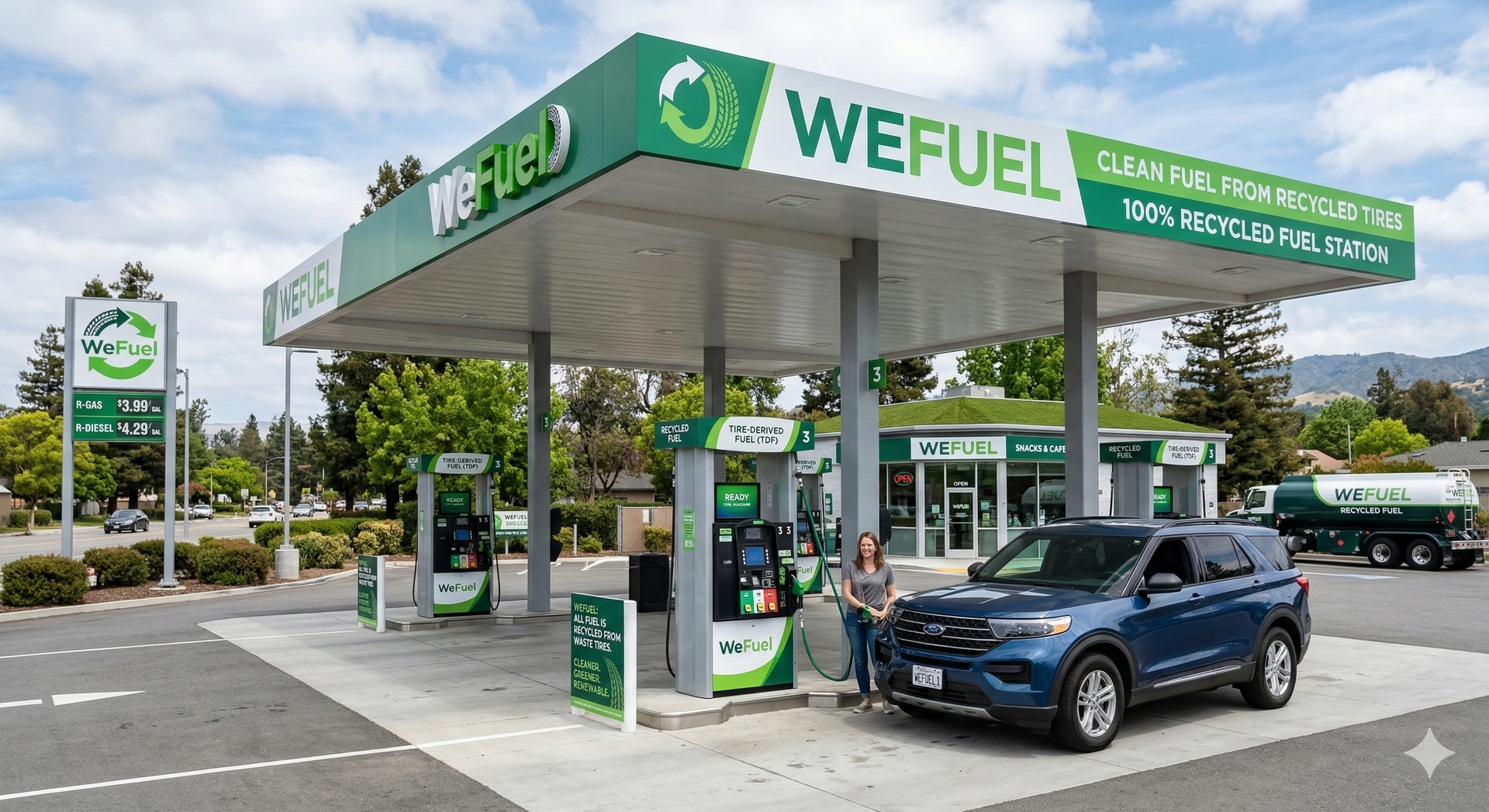
Through Project WEFuel™, WEC is researching technologies designed to refine tire-derived oil into Ultra-Low Sulfur Diesel that could meet applicable standards for use in road transportation. This pathway has the potential to convert discarded tires into a higher-value fuel product while reducing dependence on traditional disposal methods.

Recycled Rubber for Better Roads
Recovered tire rubber can be processed into crumb rubber for use in rubberized asphalt and other infrastructure applications. Incorporating recycled rubber into road materials can create a productive end market for waste tires while supporting more durable, resilient, and quieter road surfaces.
Tire-Derived Oil for Industrial Energy
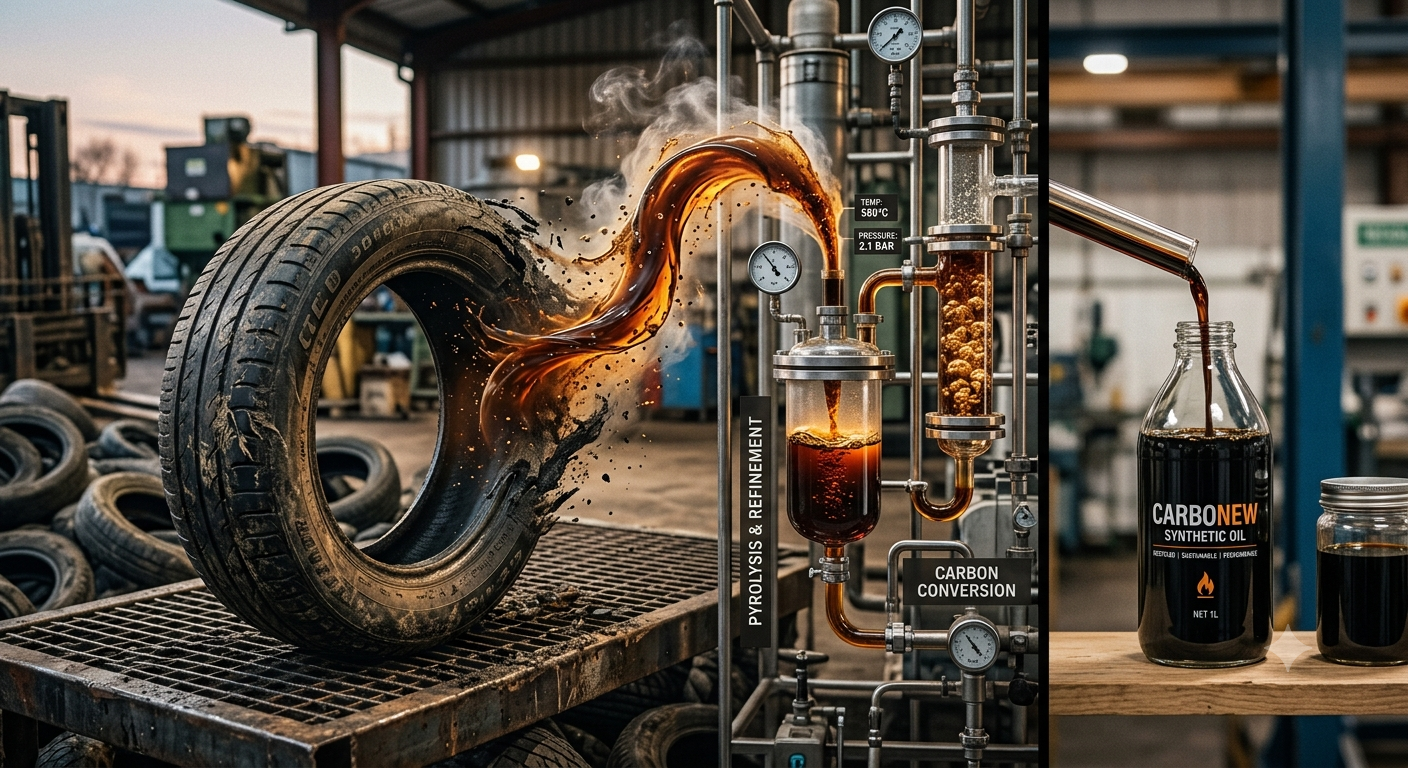
Tire-derived oil may also be used as an alternative industrial fuel in suitable boilers, furnaces, and manufacturing processes. This creates an additional outlet for recovered energy from waste tires and provides WEC with a near-term pathway for converting difficult waste into a usable commercial product.